You are here:Home » News » How to Choose a Carbide End Mill Manufacturer for OEM & Wholesale Orders
How to Choose a Carbide End Mill Manufacturer for OEM & Wholesale Orders
Views: 0 Author: Site Editor Publish Time: 2026-11-28 Origin: Site
Choosing a carbide end mill manufacturer affects much more than your purchase price. For distributors, importers, and private label tool brands, the manufacturer also influences product consistency, customer confidence, inventory availability, and the amount of technical support your team must provide.
An attractive quotation or a successful sample is a useful starting point. A dependable supply relationship requires clear specifications, repeatable production, practical order conditions, and a documented way to resolve problems.
To choose a carbide end mill manufacturer for OEM or wholesale orders, define your product requirements, verify relevant manufacturing capabilities, agree on inspection criteria, test representative samples, and evaluate a controlled production order. Compare suppliers on total purchasing cost, batch consistency, delivery reliability, and support before expanding volume.
This guide provides a practical framework for evaluating manufacturers and turning an initial inquiry into an approved supply arrangement.
1. Define Your OEM or Wholesale Purchasing Requirements
Start by explaining what you intend to buy and how you will sell or use it.
A distributor purchasing standard tools for stock has different requirements from a brand developing a custom milling cutter for a specific customer application.
Purchasing model
Typical requirement
Main evaluation priority
Wholesale standard tools
Established specifications purchased for resale
Product coverage, availability, pricing, and replenishment
Private label standard tools
Existing tool designs supplied under your brand
Consistency, marking, packaging, and SKU control
Modified standard tools
Changes to selected dimensions or features
Technical review, drawing approval, and repeatability
Custom OEM tools
Manufacturing to agreed drawings or application requirements
Design responsibility, validation, and change control
Suppliers may use “OEM,” “ODM,” and “private label” differently. Confirm the actual scope rather than relying on the label.
Prepare an initial purchasing brief covering your sales market, customer industries, tool families, quantities by specification, branding requirements, and expected reorder frequency.
A focused brief makes supplier responses easier to compare and helps avoid quotations for products that do not match your needs.
2. Match the Manufacturer’s Product Range to Your Customers
A large catalog is useful only when the manufacturer can support the tools and applications your customers actually require.
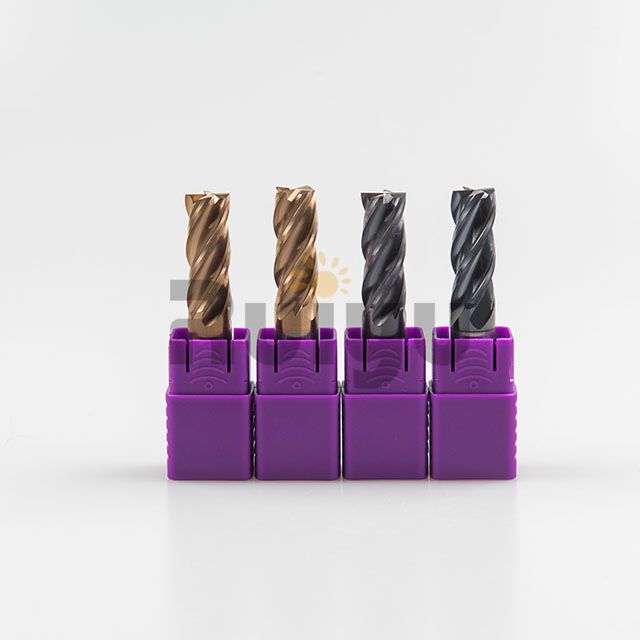
Identify the relevant families: square end mills, ball nose end mills, corner radius cutters, roughing tools, micro end mills, or long-neck designs. Then review the dimensions, units, and application ranges within each family.
Do not assume that a supplier experienced in standard general-purpose tools has the same capability for every micro, extended-reach, or special-profile product.
Ask for examples close to your proposed specifications and discuss which features require additional development.
For wholesale orders, consider both initial assortment and repeat demand. A supplier with hundreds of listed items may still manufacture each specification only after receiving an order.
Separate catalog availability from confirmed stock availability.
You can use a structured carbide end mill product range to organize your inquiry by tool type before discussing individual SKUs.
3. Verify Manufacturing Capability with Relevant Evidence
Factory ownership matters less than understanding who performs the work, who controls it, and who is responsible for the result.
Ask the supplier to explain the production route from purchased carbide blanks through grinding, any agreed edge preparation and coating, inspection, marking, and packing.
Some manufacturers use specialist outside providers for selected processes. Evaluate how those processes are approved, monitored, and traced.
Area to verify
Evidence to request
What it helps establish
Grinding capability
Relevant production examples and process explanation
Ability to manufacture your tool geometry
Inspection
An anonymized report for a comparable product
Whether critical characteristics are measured and recorded
Specification control
Drawing approval and revision procedure
How production receives the correct requirements
Traceability
Example of a batch reference linked to records
Whether a complaint can be investigated
Production planning
Explanation of stock, scheduled production, and capacity
Basis for quoted delivery dates
Outsourced processes
Scope and supplier-control procedure
Responsibility across the manufacturing route
A factory visit or live video review can help clarify how these activities connect. Ask to follow a comparable tool through the process rather than viewing equipment alone.
Equipment names and certificates provide context, but neither establishes that your specific tool will meet its requirements.
4. Specify the Tool Beyond Diameter and Hardness Labels
A description such as “6 mm carbide end mill for steel” leaves important details undefined.
Use an approved supplier model or a written specification with enough detail to distinguish the item from similar tools.
Catalog descriptions such as “HRC55” or “HRC65” should be clarified. Ask whether they describe the intended workpiece hardness range and under what application conditions. They are not a complete tool specification or a guarantee of performance.
Similarly, coating names alone do not establish product equivalence. Evaluate the complete tool and its results in the intended application.
For custom tools, agree on drawings before sample production. Record any proposed alternatives explicitly.
5. Evaluate the Quality-Control System Behind Each Shipment
A useful quality-control discussion identifies what is checked, when it is checked, how it is measured, and what happens when a result is outside the agreed limit.
Ask the manufacturer to explain incoming material controls, checks during production, and final release requirements.
For your order, define which characteristics require individual inspection and which may use an agreed sampling plan. A general statement such as “100% inspected” does not explain which characteristics are inspected.
Review whether inspection reports identify the product revision, batch, measured characteristics, acceptance limits, and results.
Also clarify the measurement setup for geometric checks. A runout value without a defined reference and method can be difficult to interpret or compare.
If the supplier presents a quality-management certificate, check its validity and scope. Treat it as evidence about the management system; continue to verify the actual product through inspection and testing.
Agree on how nonconforming tools are held and how any proposed deviation is submitted for approval before shipment.
6. Validate Samples in Representative Customer Applications
Sample evaluation should answer whether the proposed tool meets the intended requirements under documented conditions.
First, verify that the samples match the approved specification. Check dimensions, cutting-edge condition, identification, and available inspection results.
Then arrange a cutting trial representative of the application you plan to sell into.
Record:
Tool reference, revision, and sample or batch identification.
Workpiece material and condition.
Machine, holder, and tool overhang.
Toolpath, cutting parameters, and coolant arrangement.
Required component dimensions and finish.
Accepted output, replacement reason, and any process changes.
Set acceptance criteria before testing begins. This prevents the result from being judged only by whether it appears better than an unfamiliar reference tool.
A tool that performs well after changing the process may be a useful alternative, but those changes should be documented. Do not present that result as proof of identical performance under the original conditions.
Evaluate enough tools and relevant conditions to address the risk of the project. One successful sample does not establish production-batch consistency.
7. Confirm Private Label Marking and Packaging
For OEM and private label orders, the tool, label, and ordering system must identify the same product.
Discuss marking space, logo artwork, product codes, packaging dimensions, and the level of information that can fit clearly on each item.
A practical label may include your brand, SKU, key dimensions, flute count, product series, and batch reference.
Approve artwork at its final size. Where needed, review a physical sample before authorizing the production quantity.
Confirm who checks marking placement and whether it affects functional surfaces. Very small tools may require most identification to appear on the package.
Packaging should protect cutting edges and support warehouse picking, counting, and replenishment.
Also ask about separate packaging minimums, unused printed materials, storage arrangements, and artwork changes. Tool MOQ and packaging MOQ may differ.
Private labeling does not automatically grant exclusive rights to the underlying tool design. Discuss exclusivity separately if it is part of your commercial objective.
8. Clarify MOQ and Mixed-Size Order Rules
A stated minimum order quantity is meaningful only when you know what it applies to.
Ask whether MOQ is defined by complete specification, product family, marking setup, packaging design, or total order.
For example, an order of 500 tools across 25 specifications may have different conditions from 500 identical tools.
Confirm three separate points:
Can different specifications be combined on one purchase order?
Do their quantities combine for volume pricing?
Can the items be completed and shipped together?
The answers may differ.
Request quantity breaks by SKU and ask which items are stocked versus made to order. For custom tools, separate sample charges, development costs, and repeat-production minimums.
Avoid expanding slow-moving inventory only to reach a discount threshold. The preferred manufacturer should offer conditions that fit realistic demand and replenishment needs.
Where smaller trials are available, confirm their pricing and whether approval of a trial changes the minimum for future orders.
9. Compare Quotes on the Same Technical and Commercial Basis
Send each shortlisted supplier the same specification list, quantity breakdown, branding requirements, and delivery destination.
Ask suppliers to identify alternatives clearly. A different material, geometry, or coating should not be hidden inside a lower price.
Quote comparison item
What to confirm
Tool specification
Approved model or drawing revision
Quantity
Pieces per SKU and applicable price break
Unit price
Currency and validity period
Additional charges
Samples, development, setup, artwork, or marking
Packaging
Containers, labels, and outer packing
Quality documentation
Agreed reports and inspection scope
Delivery basis
Included logistics and excluded costs
Timing
Production start conditions and expected dispatch
Repeat purchasing
MOQ, pricing basis, and specification continuity
Compare complete costs for the same basket of tools. An average price per piece can conceal differences when the assortment contains several sizes.
Performance also matters. A basic measure is:
Tool purchase cost per accepted part = Tool purchase cost ÷ Accepted parts produced before replacement
This is only the tool-purchase component. Include cycle time, tool changes, scrap, and other process costs where they materially differ.
For distributors, also consider inventory holding, customer support, and complaint-handling costs.
10. Evaluate Lead Time and Repeat-Order Reliability
Separate the first-order timeline from normal replenishment.
A new OEM project may require specification review, samples, application testing, artwork approval, production, inspection, and transport. Repeat orders may follow a shorter route once those requirements are approved.
Ask what starts the quoted production period: purchase-order acceptance, deposit receipt, drawing approval, or another milestone.
Clarify whether the date refers to production completion, dispatch, or arrival at your warehouse.
For mixed orders, request availability by item. Agree on whether delayed items should hold the entire shipment or move separately, and who approves the additional freight.
Discuss how forecasts are used and whether any capacity or stock is reserved. A forecast should not be treated as a firm purchase commitment unless both parties agree.
A credible delivery promise should be supported by a clear planning process and timely notice when conditions change.
11. Review Technical Support and Complaint Handling
Technical communication during the inquiry stage provides an early indication of how cooperation may work after shipment.
Notice whether the supplier asks relevant questions, identifies missing information, and explains proposed changes. A quick response is useful when it also resolves the issue accurately.
Before ordering, agree on the information needed to investigate a complaint. This may include the SKU, batch, photographs, inspection results, operating conditions, and affected quantity.
Clarify how stock will be held during investigation and how any replacement, credit, or corrective action will be agreed.
The cause of a problem may involve the tool, the machining setup, handling, or several factors together. A documented investigation is more useful than an automatic promise or immediate rejection.
For distributors, ask what technical information can be provided to support customers, such as product dimensions, intended applications, and reviewed starting guidance.
12. Use a Supplier Scorecard with Mandatory Approval Gates
A scorecard helps organize evidence, but a high commercial score should not compensate for a failed technical requirement.
First define mandatory gates, such as approved specifications, acceptable sample results, required traceability, and customer-specific approvals.
Only compare weighted scores among suppliers that meet the necessary gates.
Evaluation category
Example weight
Evidence to consider
Application performance and conformity
30%
Inspection and documented cutting trials
Manufacturing and batch control
25%
Process review, traceability, change management
Delivery and replenishment
20%
Trial delivery, planning, and communication
Complete purchasing cost
15%
Comparable itemized quotation
OEM support and responsiveness
10%
Artwork handling, technical responses, issue process
Total
100%
These weights are illustrative. Adjust them to your business and application risks.
Use a consistent rating scale and record the evidence behind each rating. Mark unknown items as unverified instead of assuming they meet the requirement.
Review the score again after a production trial. Early sales discussions alone do not establish repeat-order performance.
13. Approve a Controlled Production Order Before Expanding
A trial production order checks the full supply process, including manufacturing, documentation, marking, packaging, and delivery.
Choose a manageable set of approved specifications with clear commercial relevance. State quantities, revisions, inspection requirements, and acceptance criteria in the purchase order.
On receipt, reconcile quantities and identities, inspect against the agreed plan, and complete any required application checks.
Keep trial inventory separate from released saleable stock until acceptance is complete.
Review discrepancies with the manufacturer and document the resolution. Expand purchasing when the evidence supports it rather than increasing volume simply because the first shipment arrived.
For a new source replacing existing supply, maintain a practical fallback during qualification. Approval should remain specific to the tested products and applications.
14. Common Mistakes When Selecting an End Mill Manufacturer
Mistake
Better purchasing practice
Choosing mainly by the lowest unit price
Compare qualified products on complete cost and supply performance
Treating machine brands as proof of quality
Review relevant manufacturing controls and product results
Ordering from a vague catalog description
Approve a precise model reference or specification
Assuming one good sample proves consistency
Verify production and subsequent batches
Applying one coating or hardness label to every application
Evaluate the actual material, operation, and tool design
Ignoring marking and packaging minimums
Quote and approve each part of the OEM scope
Confusing dispatch with delivery
Confirm milestone dates and total replenishment time
Approving the entire catalog after a limited trial
Define the scope of qualification clearly
15. What to Include in Your Manufacturer Inquiry
A complete inquiry helps the supplier return a proposal you can evaluate.
Information
What to provide
Business profile
Distributor, importer, brand owner, or industrial buyer
Target market
Sales region and main customer applications
Product scope
Tool families, sizes, and required units
Technical requirements
Approved drawings, references, tolerances, and intended use
Quantities
Initial pieces per SKU and expected repeat demand
OEM requirements
Marking, labels, packaging, and product codes
Validation
Sample expectations and acceptance requirements
Delivery
Destination, target dates, and preferred quotation basis
Identify mandatory requirements and areas where alternatives are welcome.
If your range is still being developed, share customer applications and demand evidence. Ask the manufacturer to propose a focused selection for evaluation.
Avoid treating an estimated annual forecast as guaranteed demand. Clear assumptions lead to more useful pricing and capacity discussions.
16. Frequently Asked Questions
What should I check first when choosing a carbide end mill manufacturer?
Start with product fit and specification control. Confirm that the supplier can manufacture the required tool family and document the exact product before comparing prices or branding options.
Can I buy standard end mills with my own brand?
Yes, where the manufacturer offers private label supply. Confirm the approved tool, marking, packaging, minimums, and repeat-order references. Branding does not automatically create an exclusive design.
Is buying directly from a factory always the best option?
It depends on your requirements. Direct manufacturing cooperation can support technical development and repeat production, while a trading company may offer product consolidation. Evaluate capability, responsibility, and service for the actual order.
What is the MOQ for OEM carbide end mills?
There is no universal MOQ. It depends on the specification, production arrangement, marking, and packaging. Request minimums separately for each relevant part of the order.
Should I request samples before wholesale purchasing?
For a new supplier or product, samples help verify conformity and application suitability. Follow successful sample evaluation with a controlled production order before committing to larger volumes.
Does a quality-management certificate guarantee tool performance?
No. Review the certificate’s scope and validity, then assess product-specific inspection and cutting results. System certification and application performance answer different questions.
How can I reduce variation between repeat orders?
Use approved specifications, revision control, batch identification, agreed inspection requirements, and a change-notification process. Monitor actual results across deliveries.
How long does an OEM end mill project take?
The timeline depends on technical review, sampling, testing, artwork, production, and shipping. Confirm milestones for your project instead of relying on a generic lead-time promise.
17. Discuss OEM and Wholesale End Mill Orders with RUIYU TOOL
RUIYU TOOL offers carbide end mills and OEM services including customized tool specifications, logo marking, and branded packaging.
Its product range includes square, ball nose, corner radius, micro, roughing, and other end mill types, providing a starting point for distributors and brands planning an application-focused range.
To discuss a project, send your tool list or drawings, workpiece materials, quantities by specification, branding requirements, and delivery destination.
For a new supplier evaluation, identify the sample scope and acceptance criteria. MOQ, inspection documentation, packaging, and production timing can then be confirmed against your actual requirements.